









The industrial world is undergoing a major digital transformation. One of the key technologies driving this evolution is Augmented Reality (AR).
Augmented reality in manufacturing is not just a trend — it is a practical tool that helps enterprises improve productivity, reduce costs, and increase product quality.
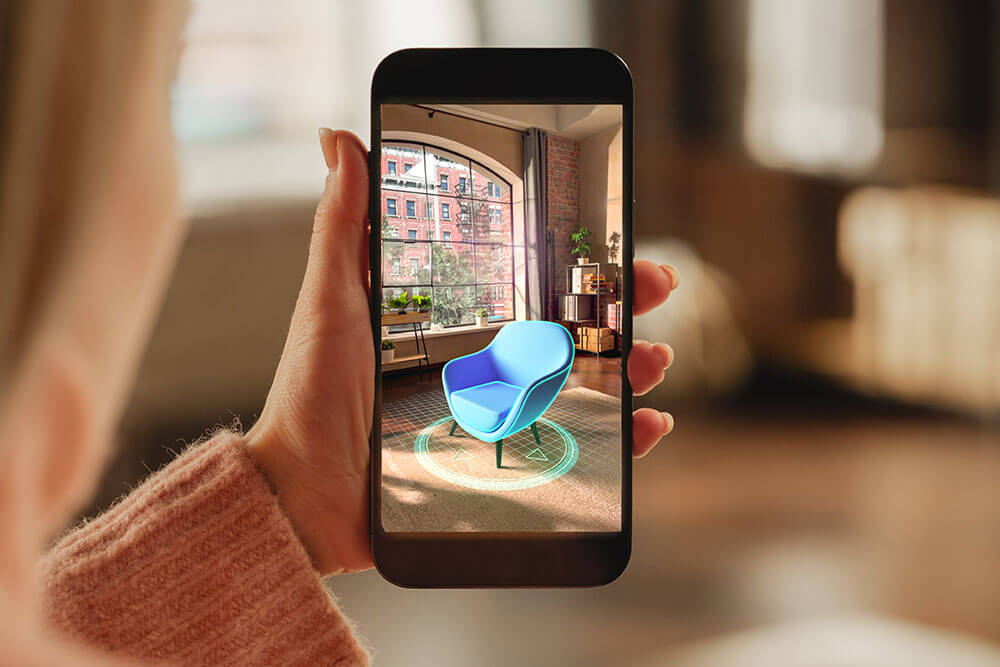
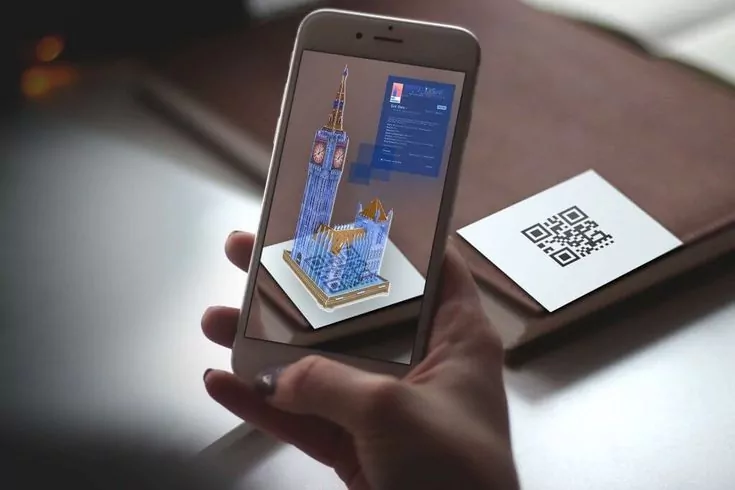
Through the overlay of digital elements onto the real environment, workers can see 3D models, visualizations, and instructions directly on the equipment or workspace, ensuring greater accuracy and efficiency in their tasks.
What Is Augmented Reality in Industry?
Augmented reality in industry is a technology that merges digital information and real-world objects into a single visual environment.
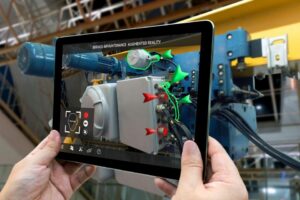
By using AR glasses, tablets, or headsets, engineers, operators, and technicians can view interactive tips, 3D models, and animations overlaid on real machines or components.
Example:
During engine assembly, a technician sees real-time digital guidance on which part to install, in what sequence, and with what torque. This minimizes errors and significantly speeds up the workflow.
Main Applications of AR in Manufacturing
-
1. Design and Prototyping
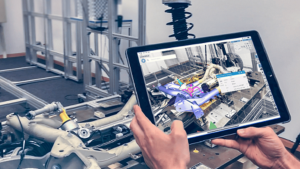
- AR enables the visualization of 3D models even before a physical prototype is built.
- Engineers can check ergonomics, spatial fit, and component compatibility.
- Virtual prototypes reduce development time and eliminate the need for costly physical models.
2. Assembly and Production
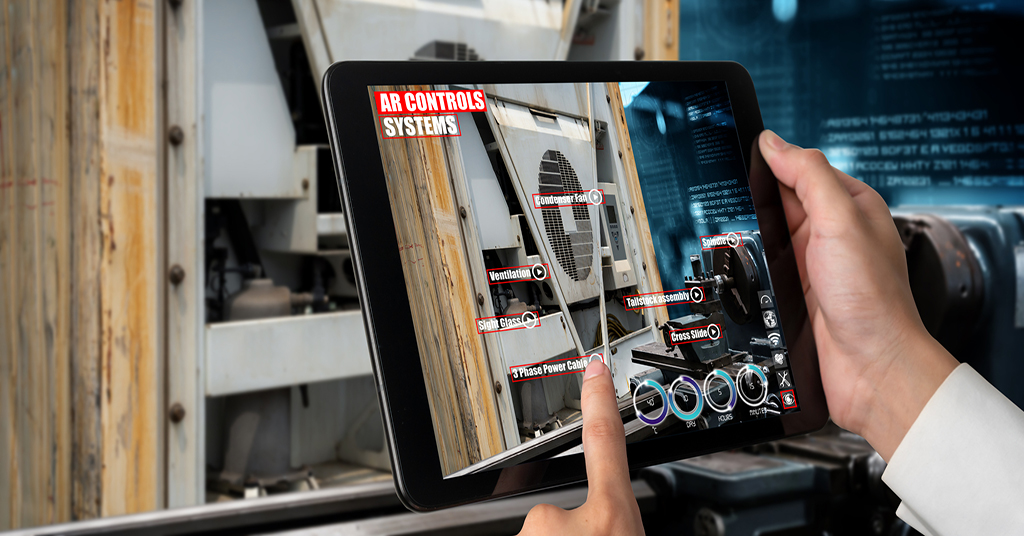
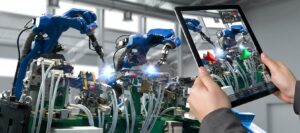
- Augmented reality on the production floor provides step-by-step visual instructions overlaid directly on machinery.
- Workers follow interactive assembly guidance, reducing human error.
- Especially valuable for complex assembly lines and new employee onboarding.
3. Maintenance and Repair
- Technicians can view interactive repair schemes and real-time data through AR devices.
- IoT sensors feed live information (temperature, pressure, vibration) into the AR interface.
- Remote assistance allows experts to guide workers in real time from anywhere in the world.
4. Training and Safety
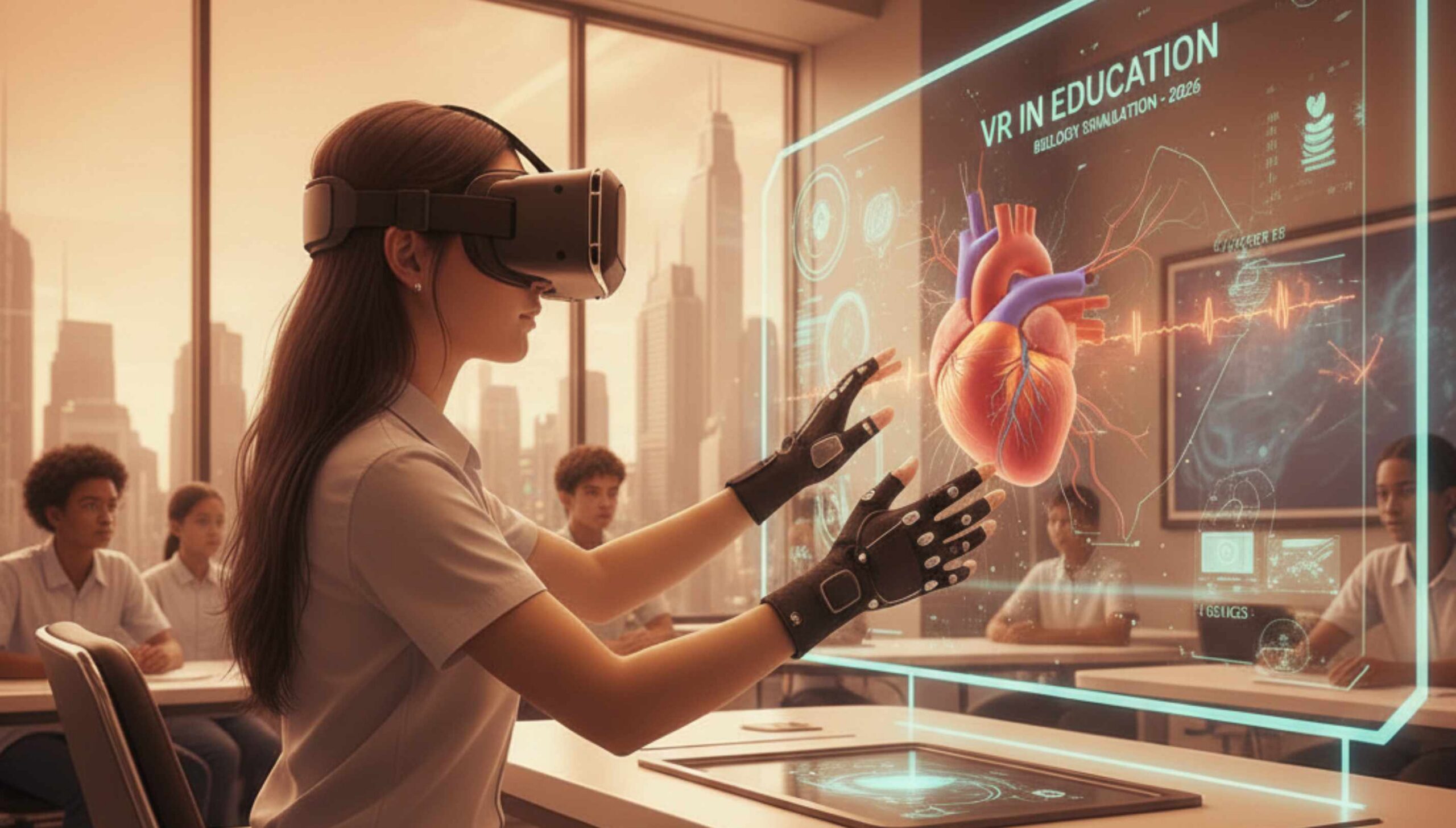
- New employees can train in a virtual environment without the risk of damaging real equipment.
AR simulations allow safe practice of emergency procedures and hazard recognition.
Benefits of Using AR in Industry
| Benefit | Description |
| Higher Productivity | Tasks are completed faster and more accurately. |
| Fewer Errors | Step-by-step digital guidance reduces human mistakes. |
| Cost Optimization | Lower need for prototypes, manuals, and supervision. |
| Enhanced Safety | Employees can train without real-world risks. |
| Interactivity & Engagement | Workers learn faster through visual and kinesthetic perception. |
| Improved Communication | Remote collaboration and real-time feedback become possible. |
Technological Framework of AR in Manufacturing
For successful implementation of augmented reality technologies in manufacturing, companies use several components:
- AR Devices: Microsoft HoloLens, RealWear Navigator, Vuzix Blade.
- Software Platforms: Unity, Vuforia, PTC Creo AR, Autodesk Fusion 360.
- IoT Integration: Real-time sensor data synchronized with AR interfaces.
- Cloud Infrastructure: For storing 3D models, analytics, and visualization data.
Comparison: Traditional Manufacturing vs. AR-Driven Processes
| Parameter | Traditional Approach | AR-Enhanced Approach |
| Employee Training | Requires in-person supervision | Can be performed directly at the workstation |
| Error Rate | High due to human factor | Reduced by up to 40% |
| Maintenance Time | Depends on experience | Shortened by 30–40% |
| Prototype Cost | High | Significantly reduced |
| Communication | Limited | Interactive and remote |
Real-World Examples of AR in Global Industry
- Boeing: Uses AR to assist in aircraft wiring assembly — reducing error rates by 40% and assembly time by 25%.
- Porsche: Implements AR in vehicle maintenance — technicians receive real-time guidance through smart glasses.
- Siemens: Uses AR to simulate production processes and evaluate ergonomics of workplaces.
- General Electric: Applies augmented reality to turbine diagnostics and visualization of sensor data.
Economic Impact of AR Implementation
| Metric | Before AR | After AR | Change |
| Assembly Time | 100% | 70% | −30% |
| Error Rate | 100% | 60% | −40% |
| Employee Training Duration | 100% | 65% | −35% |
| Prototype Costs | 100% | 50% | −50% |
Future Prospects of AR in Manufacturing
The future of augmented reality in industry looks extremely promising.
By 2030, over 60% of manufacturing companies are expected to integrate AR into their daily workflows.
Key Trends:
- Integration with AI: Real-time guidance and predictive analytics.
- Collaborative AR Environments: Multi-user virtual project design.
- Enhanced Ergonomics: Optimization of worker motion and safety.
- AR-based Plant Planning: Digital simulation of production lines before physical installation.
- Digital Twins: Real-time representation of equipment conditions synchronized with AR.
Conclusion
Augmented reality in manufacturing and industry is a transformative technology that is redefining efficiency, safety, and innovation.
By overlaying digital data on the real environment, AR provides interactive visualizations, 3D models, and prototypes that improve accuracy and operational speed.
AR is becoming a core element of digital industrial evolution.
Enterprises that adopt it today will gain a strategic advantage tomorrow — through optimized workflows, safer operations, and smarter production management.